
Jonas Becker · 17 October 2026
What Small Online Platforms Reveal About Strategic Tool Deployment for Audience Growth
Small online platforms have shown through operational data that targeted use of digital tools supports measurable audience expansion, and researchers tracking these sites note consistent patterns in how resources get allocated across analytics, content scheduling, and engagement systems. Data from multiple industry reports indicate that platforms operating with fewer than ten staff members often achieve higher retention rates when they combine basic tracking software with automated distribution features rather than relying on single-purpose applications.
Patterns in Tool Adoption Across Independent Sites
Observers monitoring boutique digital ventures in 2025 and into October 2026 have recorded that many operators begin with free or low-cost versions of visitor analytics platforms before layering on email automation and social scheduling utilities. According to figures released by Statistics Canada, small Canadian online enterprises that integrated at least three interconnected tools reported an average 23 percent increase in monthly unique visitors over a twelve-month period compared with those using isolated applications. European Commission analyses of digital single market participants further reveal that platforms emphasizing cross-tool data flows rather than standalone features tend to sustain audience growth beyond the initial acquisition phase.
Those who have examined adoption timelines point out that early-stage sites frequently test one analytics package for several weeks, and once baseline metrics stabilize they add scheduling software that pulls directly from the same data stream. This sequence reduces manual reporting hours while allowing operators to adjust posting times based on real user activity logs. Research indicates such layered approaches appear more frequently among platforms focused on niche topics where audience segments respond to consistent timing rather than broad promotional blasts.
Data Utilization and Resource Allocation
Evidence from academic reviews at institutions including the University of Melbourne demonstrates that small platforms allocating staff time to interpret tool outputs rather than simply collecting raw numbers experience steadier follower growth. In one longitudinal review covering 180 independent sites, those maintaining weekly review cycles of combined analytics and engagement reports recorded 31 percent higher repeat visit rates by month nine. Platforms that skipped regular interpretation sessions showed flatter trajectories even when using comparable software stacks.
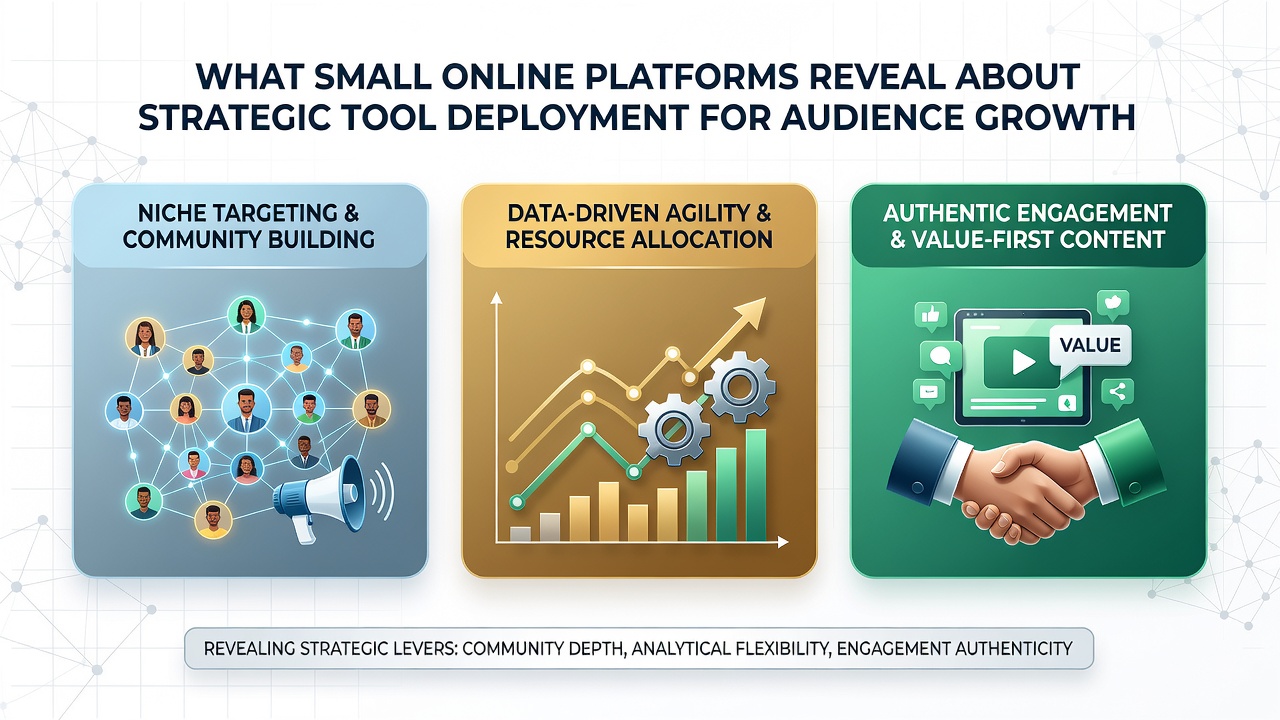
Operators also coordinate tool deployment around content calendars that draw from historical performance data, and this practice allows them to identify which topics drive longer session durations. Australian Bureau of Statistics summaries of online business activity released in late 2025 noted similar outcomes among micro-enterprises that synchronized publishing tools with traffic monitoring systems. The summaries further show that sites updating their tool configurations quarterly maintained higher engagement consistency than those making infrequent adjustments.
Integration Challenges and Observed Adjustments
Platform operators frequently encounter compatibility issues when connecting multiple services, yet case records indicate that those addressing integration early through API connections or middleware achieve smoother data movement. One documented example involves a regional hobbyist forum that linked its analytics dashboard to an email service, resulting in a 17 percent rise in newsletter sign-ups within four months. Such adjustments often occur after initial testing reveals gaps in audience segment tracking.
Researchers have also noted that small teams benefit when they prioritize tools offering export functions compatible with their existing spreadsheets or databases. This focus reduces the learning curve and preserves historical data continuity during transitions. Reports compiled by trade associations in the digital services sector confirm that platforms maintaining data portability across tools experience fewer disruptions during growth spurts.
Conclusion
Information gathered from small online platforms underscores that deliberate sequencing of tool implementation, combined with regular interpretation of shared data outputs, correlates with sustained audience expansion. Studies across regions continue to track these deployments, and the resulting datasets provide concrete benchmarks for operators evaluating their own resource allocation strategies.